
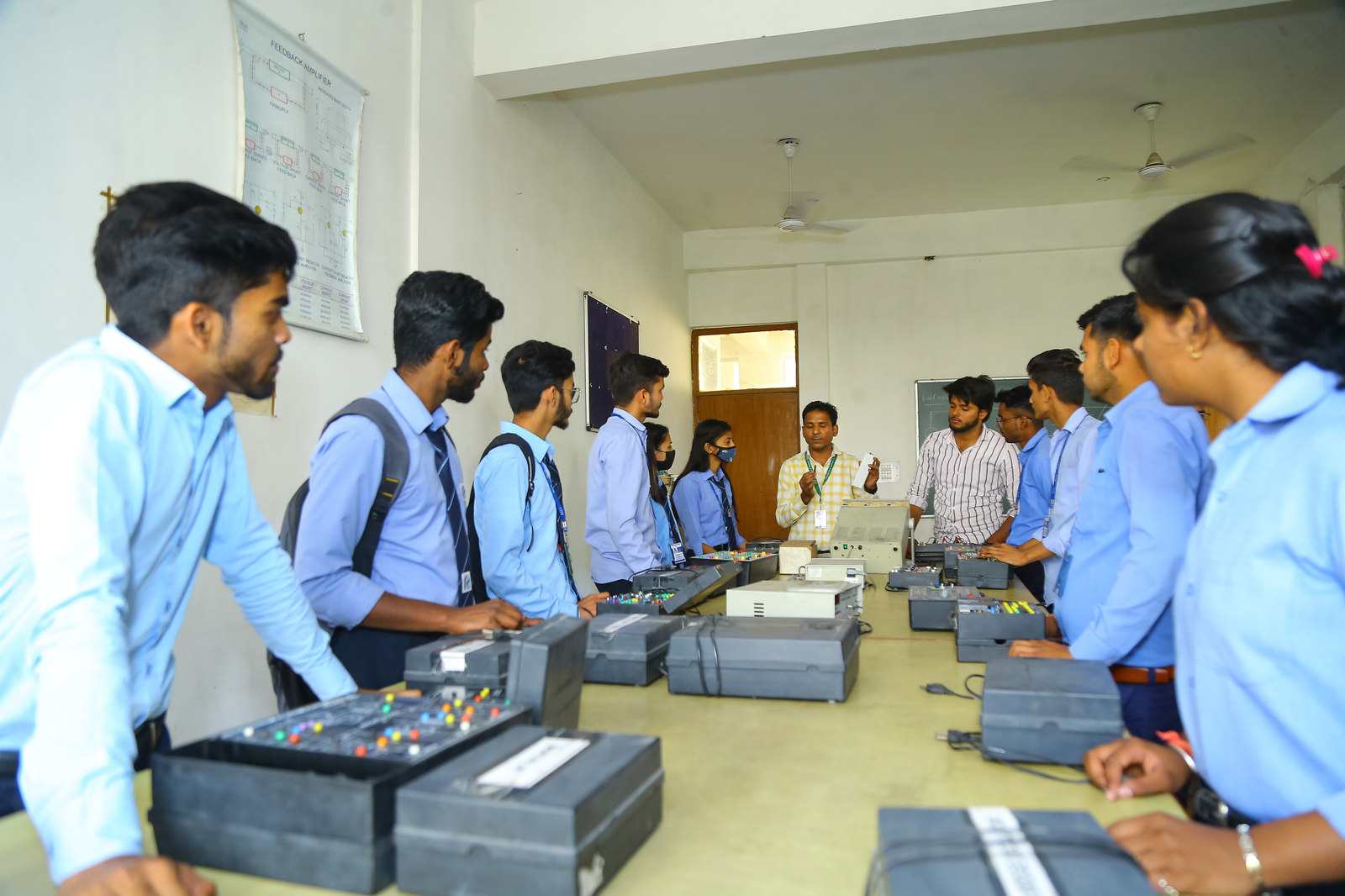
Electronics Labs at PIIT Greater Noida
The Electronics Labs at Prince Institute of Innovative Technology (PIIT), Greater Noida support students with practical exposure to electronic circuits, components, devices, sensors, testing methods and communication-based concepts. These labs help students understand how electronic systems work in real technical applications.
At PIIT Greater Noida, Electronics Labs are especially useful for Polytechnic Diploma students from Electronics and Communication Engineering and related technical branches. The facility helps students connect classroom theory with practical electronics learning, circuit observation and technology-oriented applications.
About the Electronics Labs
The Electronics Labs at PIIT Greater Noida are designed to support practical learning in electronics and communication-related areas. Students can use these labs for circuit demonstrations, component identification, testing practice, sensor-based activities, communication system awareness and project-related academic work as per institutional planning.
Electronics learning requires careful understanding of components, signals, circuits, devices, measurements and safe handling of instruments. These labs provide supervised practical exposure that helps students develop technical confidence and observation skills.
The facility supports academic discipline, circuit testing awareness, troubleshooting basics, technical documentation and hands-on learning for students preparing for roles in electronics, communication systems, automation, embedded systems, IoT-related applications and technical support areas.
Purpose of the Facility
The main purpose of Electronics Labs is to provide practical exposure to electronic circuits, components, devices and communication-related concepts. The facility aims to help students understand electronics through observation, testing, demonstration, measurement and supervised practical activities.
These labs also support mini-projects, technical presentations, practical examination readiness and innovation-based learning among students.
Key Facilities Available
Electronics Labs may include:
- Electronic circuit learning support
- Component identification and usage awareness
- Circuit testing and measurement activities
- Communication system demonstration support
- Sensor-based practical learning
- Digital and analog electronics awareness
- Basic troubleshooting practice
- Faculty-supervised practical sessions
- Support for electronics assignments and project work
- Instrument handling guidance
- Safety-focused electronics learning environment
- Support for technical demonstrations and mini-projects
Academic or Student Support Role
Electronics Labs support students by giving them practical understanding of electronic systems that are difficult to understand through theory alone. Students can observe circuit behaviour, identify components, understand measurements and learn how electronic devices are used in practical applications.
For Electronics and Communication students, these labs support subjects related to circuits, devices, communication systems, measurements, sensors, embedded concepts and basic troubleshooting. The facility also supports technical project work, practical records and academic demonstrations.
The labs help students develop accuracy, patience, technical observation, safe equipment handling and problem-solving ability—qualities that are important for internships, industrial training and future electronics-related careers.
Programs Benefited
Electronics Labs support students from different programs at PIIT Greater Noida, including Polytechnic Diploma courses, especially students from Electronics and Communication Engineering and related technical branches. Students from other programs such as BBA, BCA, MBA, B.Ed., D.El.Ed., D.Pharm. and B.Pharm. may also benefit from technology demonstrations, sensor-based projects, interdisciplinary learning and practical exposure where applicable.
Learning Environment
Electronics Labs provide a hands-on learning environment where students can understand circuits, components and communication-based systems through supervised practical activities. This helps students connect concepts such as signals, current flow, device behaviour, sensors and circuit response with real observations.
A strong electronics lab environment encourages careful handling of components, disciplined testing, accurate observation and responsible use of instruments. It also supports confidence-building by allowing students to practice technical concepts in a guided setting.
Practical Learning Support Through This Facility
Electronics Labs support practical learning by helping students understand circuits, devices, sensors, measurements and communication systems. Students can participate in supervised practical sessions, circuit demonstrations, testing activities and project preparation.
This facility also helps students develop technical thinking, troubleshooting awareness, documentation habits and innovation-focused learning. It supports skills useful for internships, technical projects, project exhibitions and electronics or communication-related employment opportunities.
Safety, Hygiene and Maintenance
Electronics Labs should be maintained as clean, organized and safety-focused technical learning spaces. Electronic components, testing instruments, wires, circuit boards, meters, trainers and lab materials should be handled carefully and only under proper supervision.
Students are expected to follow all safety instructions and avoid unauthorized circuit connections, equipment handling or experiments. Proper maintenance and disciplined use help keep the labs safe, functional and useful for practical learning.
Usage Guidelines
Students should follow basic guidelines while using Electronics Labs:
- Enter the lab only as per academic schedule or permission.
- Follow instructions given by the faculty member or lab in-charge.
- Use electronic components, instruments and tools only under supervision.
- Do not make unauthorized circuit connections or modifications.
- Handle meters, trainers, wires and circuit boards carefully.
- Follow all lab safety instructions during practical work.
- Maintain cleanliness and discipline inside the lab.
- Record readings, observations and practical work sincerely.
- Report faulty equipment, damaged components or safety concerns immediately.
- Treat the lab as a shared technical learning facility.
Why This Facility Matters
Electronics Labs matter because electronics and communication technologies are part of modern life, industry and digital systems. Students need practical exposure to understand how circuits, components, sensors and communication systems function in real applications.
The facility helps students develop technical confidence, safe working habits and practical problem-solving ability. It supports preparation for internships, industrial exposure, project work and future roles in electronics, communication, automation and related technical areas.
At PIIT Greater Noida, Electronics Labs strengthen technical education by supporting hands-on learning, circuit understanding and electronics-based skill development.
Related Facilities, Cells & Committees
Students may also explore related technical and practical learning support systems at PIIT Greater Noida:
- Electrical Labs – For electrical circuits, machines, wiring practice and power-related practical learning.
- Engineering Labs – For broader technical lab learning across engineering disciplines.
- Computer Labs – For programming, digital tools and technology-based academic work.
- Project and Innovation Lab – For electronics models, prototypes and innovation-based projects.
- Engineering Workshops – For hands-on technical practice and tool-based learning.
- Electronics and Communication Innovation Club – For electronics projects, sensors, IoT ideas and communication-based innovation.
- Electrical Systems Maintenance Committee – For electrical safety, power systems and maintenance coordination.
FAQs
Q1. What are Electronics Labs at PIIT Greater Noida?
Electronics Labs are practical learning spaces that support electronic circuits, components, sensors, communication systems, testing activities and hands-on technical training.
Q2. Which students benefit most from Electronics Labs?
Polytechnic Diploma students from Electronics and Communication Engineering and related technical branches benefit most from these labs.
Q3. How do Electronics Labs help students?
They help students understand electronic components, circuit behaviour, testing methods, sensors, measurements, communication concepts and practical applications of electronics.
Q4. Can students use Electronics Labs for projects?
Yes, students may use Electronics Labs for electronics projects, mini-projects, circuit demonstrations and academic practical work as per institutional guidance.
Q5. Are safety rules important in Electronics Labs?
Yes, safety rules are important. Students should handle components, instruments and circuits only under supervision and avoid unauthorized connections.
Q6. How are Electronics Labs connected with Electrical Labs?
Electronics Labs focus on components, circuits, sensors and communication systems, while Electrical Labs focus more on power systems, electrical machines, wiring and electrical measurements.
Q7. Why are Electronics Labs important for technical education?
They help students connect theory with practical applications, develop circuit understanding, improve testing skills and prepare for internships, projects and electronics-related career opportunities.
Assistance
Students seeking support related to electronics practicals, circuit testing, component learning, sensor-based activities, communication concepts or lab projects may connect with the Electronics Labs at PIIT Greater Noida through the concerned faculty member, lab in-charge or institutional authority.
Explore Electronics Labs