

.jpg)
Program Academic Highlights
Highlight | Details |
Program Name | Diploma in Electrical Engineering |
Short Name | DEE |
Academic Level | Diploma |
Program Type | Diploma Engineering Program |
Academic Unit Name | Institute of Engineering and Technology |
Department | Department of Electrical Engineering |
Official Institute Name | Prince Institute of Innovative Technology |
Approval | AICTE, New Delhi |
Affiliation | UPBTE, Lucknow |
Duration | 3 Years (6 Semesters) |
Academic System | Semester System |
Medium of Instruction | Bilingual (Hindi & English) |
Mode of Study | Regular / Full-time |
Course Focus | Electrical Circuits, Electrical Machines, Wiring, Measurements and Power Systems |
Learning Mode | Classroom learning, electrical labs, wiring practice, assignments, demonstrations and project-based activities |
Location | PIIT, Plot No 9, Knowledge Park-III, Greater Noida, G.B.Nagar, U.P., Bharat 201310 |
About the Program
The Diploma in Electrical Engineering (DEE) is a diploma-level engineering program designed for students who want to build academic and practical understanding of electrical circuits, machines, wiring systems, measurements and power-related applications.
The program introduces students to important areas such as basic electrical engineering, electrical machines, power systems, electrical measurements, wiring practice, circuit analysis, control systems, safety practices and industrial electrical applications.
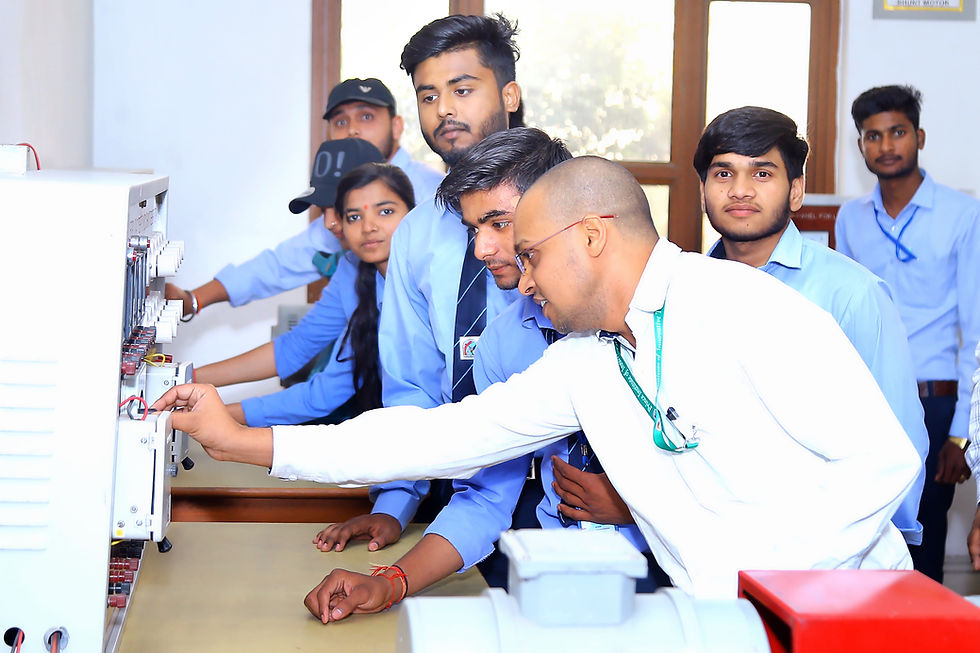
At PIIT Greater Noida, DEE helps students develop technical understanding through classroom teaching, electrical lab practice, demonstrations, assignments and project-based academic activities.
Academic Objectives
To develop a strong foundation in electrical engineering concepts.
To help students understand electrical circuits, machines and power systems.
To build practical knowledge through electrical labs and wiring-based activities.
To improve technical observation, measurement and troubleshooting skills.
To connect classroom learning with real-world electrical applications.
To prepare students for higher studies, technical certifications and electrical engineering-related pathways.
Key Areas of Learning
Electrical Engineering Fundamentals
Electrical Circuits
Electrical Machines
Wiring Practice
Power Systems Basics
Electrical Measurements
Control Systems Awareness
Electrical Safety
Transformers and Motors
Power Distribution Basics
Circuit Testing and Troubleshooting
Industrial Electrical Applications
Technical Drawing and Documentation
Project-Based Electrical Learning
Curriculum Overview
The curriculum generally begins with foundation subjects in applied science, mathematics, basic electrical engineering, technical communication and engineering drawing.
As students progress, they study electrical-focused subjects such as electrical circuits, machines, transformers, motors, power systems, measurements, wiring practice, control systems and electrical safety.
The academic structure includes classroom learning, electrical lab practice, wiring demonstrations, assignments, practical records, project work and technical skill-building activities.
Teaching and Learning Approach
Classroom teaching for electrical concept clarity
Electrical lab practice for practical understanding
Wiring demonstrations for hands-on exposure
Measurement-based activities for technical accuracy
Assignments and practical records for regular learning support
Project-based activities for applied electrical knowledge
Seminars and discussions for technical awareness
Continuous academic guidance for theory and practical improvement
Practical Learning, Labs and Projects
Electrical circuit practice
Wiring practice and demonstrations
Electrical machine study
Transformer and motor awareness
Measurement and testing activities
Power system basic experiments
Circuit troubleshooting practice
Electrical safety activities
Practical record preparation
Project and model-based activities
Skills Developed Through the Program
Electrical circuit understanding
Wiring and measurement skills
Electrical machine awareness
Troubleshooting ability
Power system basics
Technical observation
Safety awareness
Practical lab discipline
Technical documentation
Teamwork and communication
Problem-solving ability
Career readiness for electrical and power-related fields
Academic Support and Learning Resources
Electrical Labs
Engineering Workshops
Project and Innovation Lab
Smart Classrooms
Library Facility
Digital Library Facility
Reading Room Facility
ICT Enabled Learning Facility
Seminar Hall
Training and Placement Support Facility
Career Counselling Facility
Student Helpdesk Facility
Related Department and Institute
Academic Unit Name: Institute of Engineering and Technology
Department: Department of Electrical Engineering
Related Program: Diploma in Electrical Engineering (DEE) Lateral Entry
Future Scope and Academic Pathways
After completing Diploma in Electrical Engineering (DEE), students can explore higher education, skill certifications and technical pathways related to electrical systems, power distribution, maintenance, wiring, testing and industrial electrical work.
Possible academic and career directions include:
Higher studies through lateral entry
Electrical technician roles
Electrical maintenance support
Wiring and installation support
Power system support roles
Electrical testing and measurement support
Industrial electrical operations
Electrical panel and control support
Government and private sector technical opportunities as per eligibility
Apprenticeship and industry training opportunities
Students can also move toward further technical education, professional certifications and electrical engineering-related career pathways based on their interests and eligibility.
Related Facilities
Electrical Labs
Engineering Workshops
Project and Innovation Lab
Smart Classrooms
Library Facility
Digital Library Facility
Training and Placement Support Facility
Career Counselling Facility
Student Helpdesk Facility
Why Study This Program at PIIT?
Diploma-level electrical engineering learning with practical academic support
Strong focus on circuits, machines, wiring and power systems
Practical exposure through electrical labs and demonstrations
Academic support through smart classrooms, library and digital resources
Project-based learning to improve technical confidence
Guidance for higher studies, technical roles and skill development
Student-focused environment for building electrical engineering understanding
FAQs
What is Diploma in Electrical Engineering (DEE)?
Diploma in Electrical Engineering (DEE) is a diploma engineering program focused on electrical circuits, machines, wiring, measurements, power systems and practical electrical learning.
Which department offers this program?
This program is offered under the Department of Electrical Engineering.
Which academic unit covers this program?
It is covered under the Institute of Engineering and Technology.
What is the duration of DEE?
The duration is 3 Years (6 Semesters).
What is the academic system for this program?
The program follows the Semester System.
What is the medium of instruction?
The medium of instruction is Bilingual (Hindi & English).
Does the program include practical lab learning?
Yes. Students learn through electrical labs, wiring practice, demonstrations, assignments, practical records and project-based academic activities.
What can students do after Diploma in Electrical Engineering?
Students can explore higher studies through lateral entry, technical certifications, apprenticeships, electrical maintenance support, wiring support, testing support and electrical engineering-related pathways.
Enquiry
Explore academic learning and future pathways with DEE at PIIT Greater Noida.
Talk to Academic Counsellor